
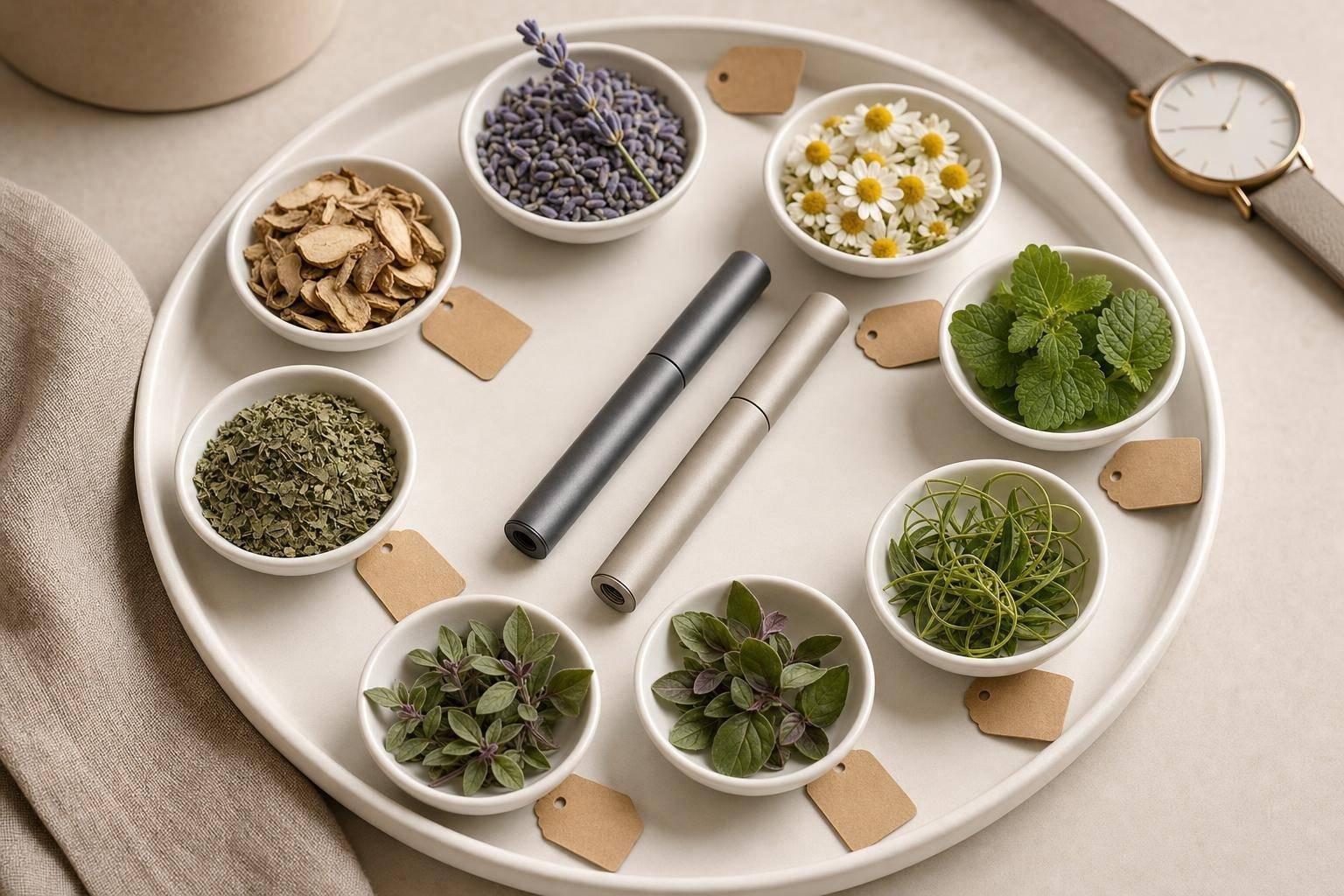
If I want an easy evening wind-down routine, I start with scent first. This guide narrows it down to 7 herbs – lavender, chamomile, lemon balm, passionflower, valerian root, holy basil, and rosemary – then matches each one to aroma, timing, format, and blend use.
Here’s the short version:
- For a soft floral note: lavender or chamomile
- For a citrus-herbal note: lemon balm
- For an earthy note: passionflower or valerian root
- For a warm or crisp herbal note: holy basil or rosemary
- For slower rituals: tea
- For a fast scent cue: room scent or nicotine-free, tobacco-free botanical diffuser pens
- For stronger herbs: use a lighter hand in blends
A few details stand out right away:
- Chamomile tea is often steeped for 8–10 minutes
- Lemon balm tea is often steeped for 5–10 minutes
- Passionflower tea is often steeped for about 10 minutes
- Valerian root tea is often steeped for 10–15 minutes
- A screen-off window of 20–30 minutes before bed can help make an evening cue easier to repeat
- The article suggests using a diffuser pen about 45–60 minutes before bedtime
- Botanical diffuser pens mentioned here are for adults 21+ only
What I like about this article is that it stays focused on product education, scent choice, label reading, and responsible use. It does not frame these herbs as medical treatment. Instead, it helps me match a botanical aroma to the kind of night I’m having, then turn that into a simple adult daily routine.
Quick Comparison
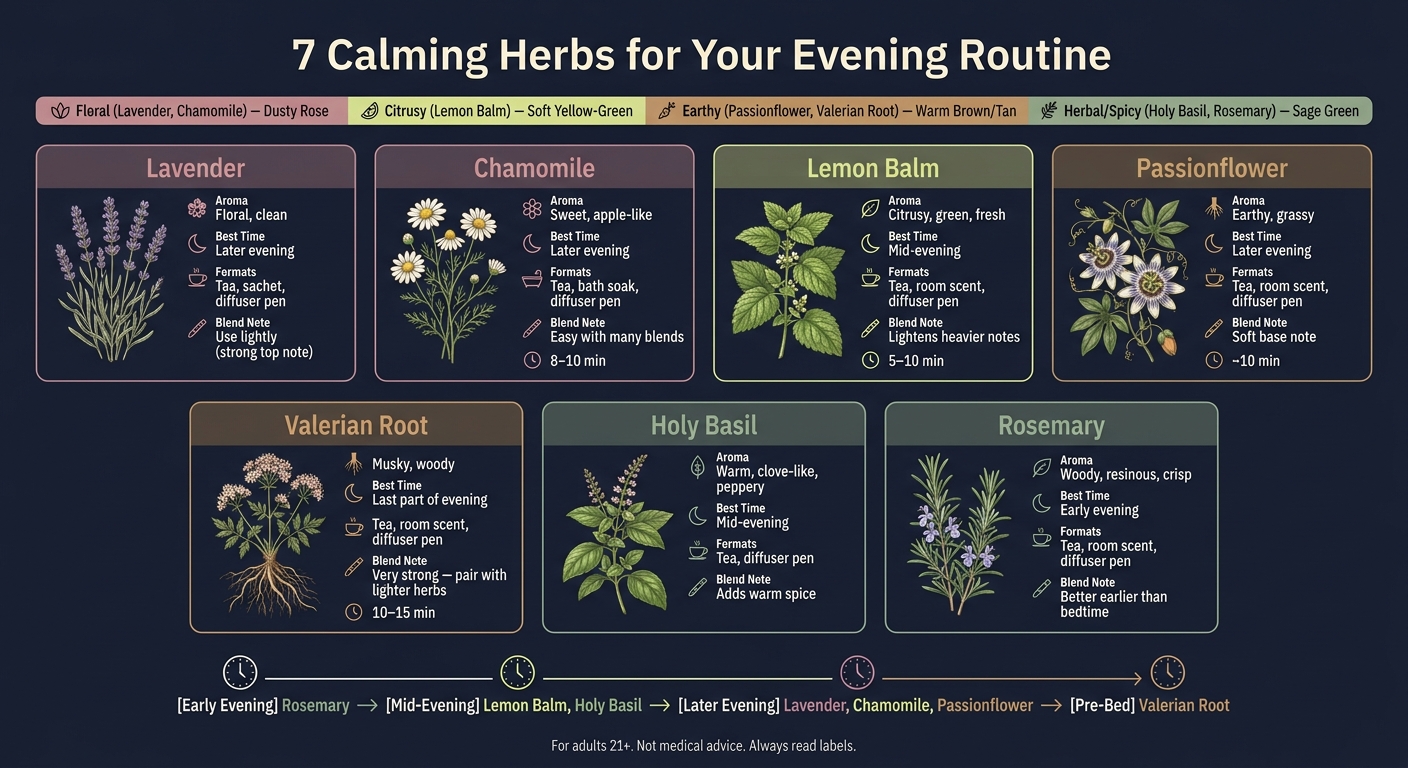
7 Calming Herbs for Evening Routines: Scent, Timing & Blend Guide
| Herb | Main Scent | Best Time in the Evening | Common Format | Blend Note |
|---|---|---|---|---|
| Lavender | Floral, clean | Later evening | Tea, sachet, diffuser pen | Use lightly |
| Chamomile | Soft, apple-like | Later evening | Tea, bath soak, diffuser pen | Easy with many blends |
| Lemon Balm | Citrusy, green | Mid-evening | Tea, room scent, diffuser pen | Lightens heavier notes |
| Passionflower | Earthy, grassy | Later evening | Tea, room scent, diffuser pen | Works as a soft base |
| Valerian Root | Musky, woody | Last part of the evening | Tea, room scent, diffuser pen | Very strong; pair with lighter herbs |
| Holy Basil | Warm, clove-like | Mid-evening | Tea, diffuser pen | Adds warm spice |
| Rosemary | Woody, resinous | Early evening | Tea, room scent, diffuser pen | Better earlier than bedtime |
In short, I’d use this piece as a plain guide: pick one herb, match it to the mood and time of night, choose one format, such as a botanical diffuser pen, and keep the routine simple enough to repeat.
sbb-itb-5292d78
How to Choose a Calming Herb for Your Evening Routine
Use four filters: scent, mood, format, and blend strength.
Start with scent. These herbs tend to fall into four groups: floral, citrusy, earthy, and herbal or spicy. If strong floral notes feel like too much, a citrusy or lightly herbal pick will often feel easier to live with. If you want something more grounded and deep for an evening wind-down routine, earthy profiles usually fit that lane.
Then think about the mood you want to set. A cozy, soft atmosphere often pairs nicely with chamomile or passionflower. A calm, clear wind-down leans well toward lemon balm or holy basil. For a gentle transition to rest, use lavender with a light hand. Timing also plays a part. Citrusy and spicy herbs tend to fit better earlier in the evening, while deeper earthy scents are often better in the last hour before bed.
Format matters too. Tea naturally slows things down. Nicotine-free botanical diffuser pens and room mists bring out aroma fast, which can work well when you want to shape the room or your adult daily routine without much setup. Once you keep those four filters in mind, the herb-by-herb sections become much easier to scan.
One practical note on blend use: not every herb shines on its own. Valerian root, rosemary, and lavender all have strong aromas, and too much can take over a blend. They usually work better as accent notes next to softer herbs like chamomile or lemon balm.
Use the table below for a fast match before you read each herb profile.
| Aroma Profile | Herbs | Best Evening Use | Blend Use |
|---|---|---|---|
| Floral | Lavender, Chamomile | Bedtime atmosphere, emotional softness | Lavender is a strong top note; use sparingly |
| Citrusy | Lemon Balm | Bright calm, refreshing reset | Excellent for lightening earthy or heavy blends |
| Earthy | Passionflower, Valerian Root | Grounding, deep calm | Best as a base; often needs a lighter aromatic topper |
| Herbal/Spicy | Rosemary, Holy Basil | Clear-headedness, calm focus | Rosemary is very strong; holy basil adds a warm edge |
1. Lavender
Aroma profile
Lavender has a floral, clean scent with a light herbaceous edge. It feels soft but still easy to notice, which makes it a solid pick for a simple evening wind-down routine.
Best-fit evening mood
Use lavender when you want a clear signal to slow down and move out of daytime mental clutter into a quieter part of the evening.
Common formats
You can use dried lavender in tea, a diffuser, or a nicotine-free botanical diffuser pen. A diffuser pen is handy when you want a fast, low-effort scent reset during your adult daily routine. Pillow sachets give you a passive background aroma with almost no setup. If you’re building a blend, keep lavender light so it stays on top instead of taking over the whole mix.
Blend compatibility
Lavender pairs well with chamomile, lemon balm, rose, frankincense, and clary sage. In those blends, it adds a light top note without overpowering the other aromas.
2. Chamomile
Aroma profile
If lavender comes across a bit sharp, chamomile is the softer floral pick. It has a gentle, apple-like sweetness, warm honey notes, and a faint hay-like or grassy layer underneath. The overall feel is familiar, mellow, and smooth around the edges.
Best-fit evening mood
Chamomile fits that part of the evening when you’re done for the day, but your mind is still a step behind. It suits a quiet evening wind-down routine and helps set a softer tone as the day fades out. That’s a big part of why it shows up so often in cozy nighttime rituals and adult daily routine habits.
Common formats
For a slower evening wind-down routine, tea is the classic choice. If you want a faster scent cue, a nicotine-free, tobacco-free botanical diffuser pen can work well.
Chamomile tea is best steeped for 8–10 minutes in a covered cup, which helps keep the botanical aroma from drifting off with the steam. In a botanical diffuser pen, chamomile usually comes across as softer and rounder than it does in tea. It also works well in bath soaks and pillow sachets if you want more of a quiet background experience instead of something front and center.
Blend compatibility
Chamomile pairs well with lavender, lemon balm, rose, passionflower, and valerian root. If you want a deeper evening blend, passionflower or valerian root can help round out the mix. Use caution if you’re allergic to ragweed, marigolds, or chrysanthemums.
3. Lemon Balm
Aroma profile
Lemon balm smells clean, green, and lightly citrusy. The overall scent is fresh, lemony, and herbal.
Best-fit evening mood
Lemon balm feels lighter than deeper evening herbs, which gives it a different place in an evening wind-down routine. It fits well on a restless evening after a stressful day, especially when you want the night to feel a bit quieter without turning heavy or dense.
Common formats
Lemon balm works well as tea or in a nicotine-free botanical diffuser pens. For tea, steep dried leaves in covered hot water for 5 to 10 minutes. In a diffuser pen, the aroma comes across as bright and light, which can make it easy to work into an adult daily routine.
Blend compatibility
Lemon balm pairs well with lavender, chamomile, and cedarwood. Lavender softens the edges and gives the blend a more even feel. Chamomile makes the aroma rounder and cozier. Cedarwood adds a warm, grounded base when you want the blend to feel more settled.
If lemon balm appears on the label, check for the botanical name Melissa officinalis. That’s a simple way to confirm what you’re looking at before the scent shifts from a bright citrus-herbal profile to a softer, more floral evening note.
4. Passionflower
Aroma profile
Passionflower has a subtle, earthy scent with a mildly grassy edge, plus faint floral and woody notes.
Best-fit evening mood
If lemon balm feels a bit too bright, passionflower takes things in a softer, more grounded direction. It fits well on nights with late-night mental restlessness, when the day is done but your mind is still running a lap or two behind. The aroma is quiet and understated, not sharp or stimulating, so it plays a different role in an evening wind-down routine than the brighter herbs listed earlier.
Common formats
For a simple evening routine, passionflower tends to fit best in tea or a nicotine-free botanical diffuser pen. For tea, steep 1 to 2 tablespoons of dried herb in 8 oz of hot water, keep it covered, and let it sit for about 10 minutes.
When you check the label, look for Passiflora incarnata, which may also appear as maypop. That’s the species most often used in herbal preparations. It’s different from Passiflora edulis, the passionfruit species used in food.
Blend compatibility
Passionflower works well as a soft base note with lavender, lemon balm, chamomile, or valerian root. It’s a good pick when you want a blend to feel quieter rather than brighter.
5. Valerian Root
If passionflower comes across as soft, valerian sits at the deep end of the scent range here. It has the most intense presence on the list.
Aroma profile
Valerian root has a bold, earthy, musky aroma with woody notes. That darker scent profile gives valerian its own clear role in an evening blend.
Best-fit evening mood
Valerian fits nights when you feel overstimulated, physically tense, or mentally overfull. It works well for an evening wind-down routine when lighter herbs don’t seem like enough and you want something deeper and more grounded in character. That makes it a good fit for slow, low-key nights.
Common formats
Valerian tends to work best as a tea or in a nicotine-free botanical diffuser pen. As a tea, it’s earthy and bitter, so people often steep it for 10 to 15 minutes and soften the taste with honey, citrus peel, or chamomile.
It also fits well in room-scent blends when you want your space to feel more grounded before bed. Its heavy aroma suits the last stretch of an evening wind-down routine. Since valerian is so strong, it usually pairs best with lighter herbs.
Blend compatibility
Valerian works best with herbs that soften or lift it:
- Lavender softens it
- Lemon balm brightens it
- Chamomile rounds it out
- Passionflower keeps it smooth
6. Holy Basil
After valerian root’s deeper aroma, holy basil gives you a warmer, clearer option. Holy basil, also called tulsi, leans more toward calm clarity than a heavy nighttime scent. It’s often a good fit for a wired-but-tired evening, when your mind still feels busy but you’re ready to slow the pace.
Aroma profile
Holy basil has a warm, spicy, clove-like aroma with peppery edges. Tulsi varieties can range from mild and sweet to peppery, lemony, or woody. That range makes it easy to use in tea or in a diffuser pen.
Best-fit evening mood
Choose holy basil when you want a warm, centered scent for a calm evening reset. It fits a calm, focused evening wind-down routine without feeling too heavy.
Common formats
Holy basil is often brewed as herbal tea from dried leaves and flowers, steeped for 5 to 7 minutes in water heated to about 200°F. Covering the cup while it steeps helps preserve the aroma. It also works well in a nicotine-free, tobacco-free botanical diffuser pen when you want a warm, spicy herbal note for an evening wind-down routine.
Blend compatibility
Pair it with lemon balm, chamomile, lavender, or rose to soften the spice.
7. Rosemary
Where holy basil leans warm and spicy, rosemary feels crisp and bright. It’s a good pick for evenings when you want calm, clear attention instead of a soft floral scent. In practice, it sits nicely between a busy day and a quieter evening wind-down routine.
Aroma profile
Rosemary has a distinct herbal, woody, resinous aroma with a slight camphor-like edge. Compared with most herbs on this list, it feels brighter and a bit sharper.
Best-fit evening mood
Rosemary fits alert calm more than drowsiness. It works best for an early evening reset or a focused wind-down moment, not the final stretch before bed. Use it earlier in the evening, then shift to softer herbs like lavender closer to bedtime.
Common formats
Rosemary tea is a practical choice when you want a gentler herbal profile. It can also work in a nicotine-free, tobacco-free botanical diffuser pen earlier in the evening, where its herbal sharpness can act as a grounding aroma during an adult daily routine.
Blend compatibility
Rosemary’s sharper profile tends to soften when paired with chamomile, lemon balm, or holy basil. Chamomile and holy basil, in particular, can round out rosemary’s edge without losing its bright herbal character.
Next, use the comparison table to match rosemary with the other herbs by scent and evening use.
Using Honppo Nighttime Diffuser Pens in a Simple Wind-Down Routine
After you pick a herb by scent, the next step is simple: turn it into a steady evening cue. If tea feels like too much work late at night, Honppo Nighttime Botanical Diffuser Pens give you a no-steep, no-cleanup, no-flame, and no-ash option that fits more easily into an evening wind-down routine.
Honppo offers two nighttime formats. The Nighttime Botanical Diffuser Pen uses a standard nighttime herbal blend. The Melatonin Nighttime Botanical Diffuser Pen includes melatonin. Both options are nicotine-free and tobacco-free, and each pen delivers up to 800–900 puffs.
Before choosing a blend, check the ingredient list. Look for familiar botanicals such as Lavandula angustifolia (lavender) or Matricaria chamomilla (chamomile). Also check that the packaging states there is no combustion. These pens vaporize botanicals instead of burning plant material, which means no smoke and no ash.
Once you’ve chosen a blend, use it during a set evening window. A simple approach is to use the pen 45–60 minutes before your target bedtime, along with dim lights or a screen-free activity like reading. Using it at about the same time each night – ideally between 9 PM and 11 PM – can make your adult daily routines feel more steady and easier to repeat.
Quick Comparison Table
Each herb brings its own aroma and its own place in an evening wind-down routine. Use the table below for a fast side-by-side look.
Pay close attention to the Ideal Evening Mood column. In many cases, that’s the easiest way to pick a botanical aroma that matches how your evening actually feels.
| Herb | Aroma Profile | Ideal Evening Mood | Common Formats | Blend Pairings |
|---|---|---|---|---|
| Lavender | Floral, clean, slightly sharp | Bedtime atmosphere, mental quiet | Tea, sachet, pillow mist, diffuser pen | Chamomile, Lemon Balm, Rose |
| Chamomile | Sweet, apple-like, hay-like | Gentle wind-down, soft landing | Tea, bath soak, diffuser pen | Lavender, Lemon Balm, Passionflower |
| Lemon Balm | Bright, lemony, fresh | Mental clutter, restless evenings | Tea, room scent, diffuser pen | Chamomile, Valerian Root, Rosemary |
| Passionflower | Earthy, grassy, herbaceous | Quieting a busy mind | Tea, room scent, diffuser pen | Valerian Root, Chamomile, Lemon Balm |
| Valerian Root | Musky, pungent, woody | Bedtime wind-down, deeper grounding | Tea, room scent, diffuser pen | Chamomile, Lemon Balm, Lavender |
| Holy Basil | Warm, clove-like, peppery | Emotional exhaustion, calm reset | Tea, room scent, diffuser pen | Lemon Balm, Chamomile, Rose |
| Rosemary | Pine-like, woody, fresh | Mental clarity, early evening reset | Tea, room scent, diffuser pen | Lavender, Lemon Balm, Chamomile |
As a simple rule, softer herbs work well when you want a light evening cue. Stronger aromas make more sense when you want something deeper and more grounded. Once you’ve got a sense of the scent profiles, the next move is to turn your pick into an easy evening wind-down routine.
Build a Simple Evening Relaxation Routine
Use the herb profiles above to shape a routine that fits how your evening actually feels. Keep it simple: choose one anchor herb, one supporting herb, one format, and one fixed cue.
Match the anchor herb to the kind of night you’re having. Go with chamomile for a soft landing, or lemon balm for a clearer reset. Then add one supporting herb to round out the botanical aroma.
Your format changes the feel of the routine. Tea slows things down and adds a ritual. A botanical diffuser pen gives you a fast, low-effort cue when you want something easy. If you’re blending herbs, a simple 2-to-1 ratio helps keep the scent balanced. Pick the format first, then connect it to a fixed cue like a shower, reading, or lights-out.
A routine is easier to repeat when scent is paired with the same nightly cue. A screen-off window – putting your phone away 20 to 30 minutes before bed – along with dimming overhead lights, gives your evening a clear signal that the day is closing. Tie your herbal ritual to something you already do, and it tends to feel more natural in your adult daily routine.
For example, try chamomile + lavender for a softer evening wind-down routine, or lemon balm + rosemary for a fresher reset.
Use the comparison table below to pick the simplest match for your routine.
Responsible Use and Ingredient Awareness
Once you pick a blend, start with the basics: check the label and pay attention to how much you use. Herbal scent products, including botanical diffuser pens, can fit into an adult daily routine, but they are not medical treatment. Read the label before use.
Look for full botanical names, clear directions, batch or lot numbers, and third-party testing for contaminants such as pesticides, mold, or heavy metals. Skip products that hide behind vague “proprietary blends” and don’t name the herbs inside.
A simple approach works best:
- Try one herb at a time
- Wait 1–2 weeks before adding another
- Stop use right away if you notice dizziness, coughing, headaches, or irritation
People with allergies to ragweed, daisies, or marigolds should avoid chamomile.
Since these herbs may be inhaled or brewed as tea, ingredient awareness matters just as much as aroma choice. If you are pregnant, nursing, taking medication, or dealing with a chronic condition, talk with a healthcare professional before use. Valerian and passionflower may interact with sedatives, and inhaled aromas can act faster than tea.
Honppo Nighttime Botanical Diffuser Pens are nicotine-free, tobacco-free, and for adult use only (21+). Follow all directions for use and cleaning. Keep all herbal products out of reach of children.
Conclusion
There’s no single best calming herb. The right pick is the scent you’ll want to come back to night after night. Maybe that’s a soft floral note, a bright citrus edge, an earthy tone, a warm spice profile, or a crisp woody aroma. Each one suits a different evening wind-down routine, so that fit is a good place to start.
Use the list and table as a quick guide, not a hard rule. Pick one scent, check the label before you buy or use it, and give it a few nights before you decide. The point is to build a calm evening cue, not to make a medical claim.
Once you’ve chosen a scent, keep the routine simple. Simple routines tend to stick. Check out our botanical diffuser guides for more tips on building your evening habit. Choose one herb you enjoy and make it part of your nightly cue, whether that’s a tea or a nicotine-free botanical diffuser pen. Start with one herb, repeat it, and only switch if the botanical aroma doesn’t feel like the right fit.
FAQs
Which herb should I start with if I’m sensitive to strong scents?
If you’re sensitive to strong scents, passionflower is a good place to start. Its botanical aroma is lighter and less pronounced than herbs like lavender or chamomile.
Chamomile is another gentle, beginner-friendly pick, with a soft, apple-like sweetness. It helps ease people into herb-based aromas without feeling too intense. With lavender and valerian root, a little more care makes sense. Lavender can feel overpowering if you use too much, and valerian root has a strong, earthy smell that some adults may find hard to get used to.
Can I use more than one herb in the same evening routine?
Yes. Mixing herbs in the same evening wind-down routine is common, and it can let you enjoy a few botanical aromas or sensory notes at the same time.
For example, lavender pairs well with chamomile, lemon balm, or rose for a balanced, spa-like atmosphere. It helps to keep things simple: pick one main goal for your routine, and check ingredient overlap before combining multiple products or tinctures.
How do I know if a botanical diffuser pen label is trustworthy?
Look for clear ingredient transparency and herbs meant for herbal use. Skip unknown plants or vague ingredient lists, and pick blends with intentional botanicals that fit your evening wind-down routine.
If you have health conditions or take medications, consult a qualified healthcare professional before starting any new inhalation practice.