

A short evening wind-down routine is easier to keep than a long one. I’d keep it to 3–5 steps, start 30–60 minutes before bed, and follow the same order each night.
Here’s the whole idea in plain terms:
- Pick a set start time like 10:00 PM
- Dim lights and shut down screens
- Write down 1–3 tasks for tomorrow
- Use one calm habit such as reading, stretching, or slow breathing
- If I want, add one nicotine-free, tobacco-free botanical diffuser step last
A few numbers stand out:
- 30–60 minutes is the target wind-down window
- 65°F to 68°F is the bedroom temperature range mentioned
- 2–5 minutes of light stretching is enough on busy nights
- A 15–20 minute version can still cover the basics
What I like here is the order: first cut down input, then do one or two quiet habits, then end with an optional cue. That keeps the evening wind-down routine short, clear, and easier to repeat as part of an adult daily routine.
If I were taking the article down to its core, it would be this: start on time, keep stimulation low, and make the last step simple enough to do even when the day ran late.
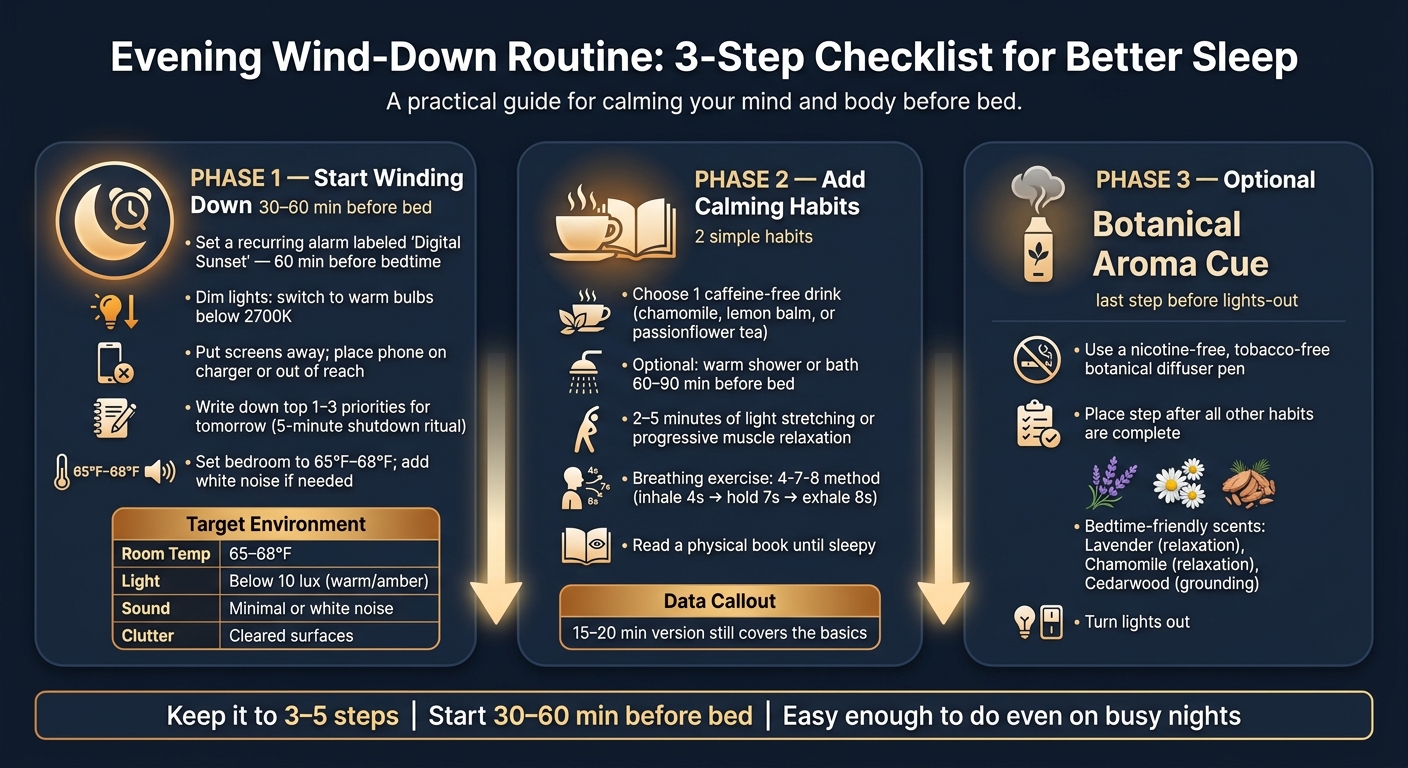
Evening Wind-Down Routine: 3-Step Checklist for Better Sleep
Step 1: Start winding down 30 to 60 minutes before bed
Start your wind-down 30 to 60 minutes before bed, and stick with the same pattern each night. Keep it simple: lights down, screens off, room reset. Repeating the same steps helps signal that the day is ending.
Set a nightly start time and dim the lights
Set a recurring phone alarm for 60 minutes before your target bedtime. Label it "digital sunset" or "start winding down" so it’s easy to spot. When it goes off, turn off overhead lights and switch to warm lamps instead.
Use bulbs below 2700K, like warm white or amber. Bright light can delay melatonin release, so this small shift matters more than most people think. Once the room is dim, move straight into screen shutdown and a little prep for tomorrow.
Put screens away and wrap up tomorrow’s prep
When the alarm goes off, stop checking work messages and place your phone on the charger. If you can, keep it in another room. If not, at least put it out of arm’s reach.
Then take 5 minutes for a simple shutdown ritual. Unfinished tasks tend to keep circling in your head, so write down your top 1–3 priorities for tomorrow. After that, close open tabs and apps. You don’t need to solve anything in that moment – just name it, park it, and move on.
Then finish by making the bedroom cooler, quieter, and less cluttered.
Make the bedroom cool, quiet, and clear
Keep the room cool. A temperature of 65°F to 68°F supports sleep. If you can’t change the thermostat, use a small fan to keep air moving.
For sound, white noise or even a basic box fan can help mask sudden noises. Last, do a quick visual sweep: clear off the nightstand and move work devices out of the room. A visually simple space helps keep the bed tied to sleep, not emails, tabs, or tomorrow’s to-do list.
| Environmental Element | Target Setting | Why It Matters |
|---|---|---|
| Room Temperature | 65°F–68°F | Supports the body’s natural core temperature drop |
| Light Level | Below 10 lux (warm/amber) | Triggers melatonin release |
| Sound | Minimal or white noise | Prevents sleep-fragmenting arousals |
| Clutter | Cleared surfaces, no work devices | Strengthens the mental bed-sleep association |
sbb-itb-5292d78
Step 2: Add calming habits that are easy to repeat
Once the room is set, add two simple habits you can stick with: one drink and one calming activity. Keep it easy. The goal is to build a routine you can repeat every night without much effort.
Pick one caffeine-free drink and one physical habit
Choose one drink and one physical habit, and pair them the same way each night. Go with a caffeine-free option like warm water or herbal tea so you’re not adding extra stimulation before bed. Chamomile, lemon balm, and passionflower tea are solid picks.
For the physical habit, a warm shower or bath 60 to 90 minutes before bed can help your body cool down and settle. If that doesn’t fit your evening routine, try 2 to 5 minutes of light stretching or progressive muscle relaxation. It’s a simple way to let go of physical tension without winding yourself up.
Clear your head with journaling, breathing, or mindfulness
Write down tomorrow’s top 1 to 3 tasks so they don’t keep circling in your head. Sometimes that alone helps. If your mind still feels busy, shift to breathing.
Try the 4-7-8 method: inhale for 4 seconds, hold for 7, then exhale for 8. The longer exhale can help your body settle. After that, move into a quiet activity like reading.
Switch to a quiet activity like reading
Read a physical book until you start to feel sleepy, then get into bed.
Step 3: Add an optional botanical aroma step before lights-out
After your reading step, add one brief botanical aroma cue right before lights-out.
Where a diffuser pen fits in the sequence
Place this at the very end of your routine, once screens are put away and calming habits like journaling, stretching, or reading are done. Use it once, briefly, as your last step before bed. Over time, a steady scent can become a cue your brain links with the move into your evening wind-down routine.
What to look for in a nighttime aroma profile
For a bedtime routine, stick with mild, bedtime-friendly scents. Here are a few nighttime-friendly botanical notes and what they’re generally linked with:
| Aroma Note | Associated Effect |
|---|---|
| Lavender | Commonly associated with relaxation |
| Chamomile | Commonly associated with relaxation |
| Cedarwood | Often used for grounding and evening calm |
If you’re picking a botanical diffuser pen for nighttime use, look for one that’s nicotine-free and tobacco-free, uses no flame or combustion, and produces no ash. A compact pen format also works well on a nightstand and doesn’t take up much space.
Honppo product example for an evening routine

If you want a ready-made option, Honppo’s Nighttime Botanical Diffuser Pen fits this use. Honppo’s Nighttime Botanical Diffuser Pen is a nicotine-free, tobacco-free option for adults. It uses no flame or combustion and features a lavender-inspired botanical aroma profile suited for evening use. Available at honppo.com for adult use only. Then turn the lights out and keep the routine short.
Conclusion: Keep your checklist short enough to use every night
A good evening wind-down routine should be short enough that you’ll still do it on busy nights. Aim to start 30 to 60 minutes before bed. Dim the lights, put screens away, sip a caffeine-free drink, do one calming activity, and, if it fits your adult daily routine, add an optional botanical diffuser pen step right before lights-out. If something feels optional most nights, cut it.
Don’t build a routine that only works when the evening goes perfectly. If it falls apart the minute you’re tired, behind schedule, or just done with the day, it’s too much. Keep it to 3 to 5 steps you can finish even when you’re exhausted.
Key points to remember each night
Start on time. Treat your evening wind-down start time like a fixed appointment, not a task you squeeze in after everything else. Dim the lights early and keep the room calm so your body gets the signal that the day is wrapping up.
Keep stimulation low. One calming activity is enough – stretching, reading, or journaling all work. If you use an optional botanical diffuser pen step, put it last, right before lights-out, as a simple cue that the night is shifting into rest.
Make it easy to recover after a miss. Skip a night? Don’t turn it into a whole thing. Reset with the bare minimum: phone away, lights dimmed, and three slow breaths.
FAQs
What if I only have 15 minutes before bed?
Focus on consistency over how long the routine lasts. Start with two simple anchors: dim the lights, then spend 5 minutes on slow breathing or a quick mental brain dump.
You can keep it even simpler: tidy up, change into sleepwear, do 10 minutes of gentle stretching or reading, then finish with 5 minutes of slow breathing. Regularity matters more than a longer routine.
How long does it take for an evening routine to feel natural?
It usually takes two to three weeks of doing the same nightly sequence for your brain to link that routine with bedtime.
When you stick with it, the pattern starts to work like a steady cue that your evening wind-down routine is starting. After a while, it tends to feel less like a task and more like a normal part of your night.
Can I skip the optional botanical aroma step and still benefit?
Yes. You can skip the botanical aroma step and still get the main value from your evening wind-down routine.
What matters most is consistency. A steady evening routine helps signal that the day is slowing down. Simple anchor habits can do that job well:
- Dimming the lights
- Setting a screen curfew
- Doing a few minutes of light stretching
- Journaling
You can mix and match these habits to fit your routine, your space, and your personal preferences.