
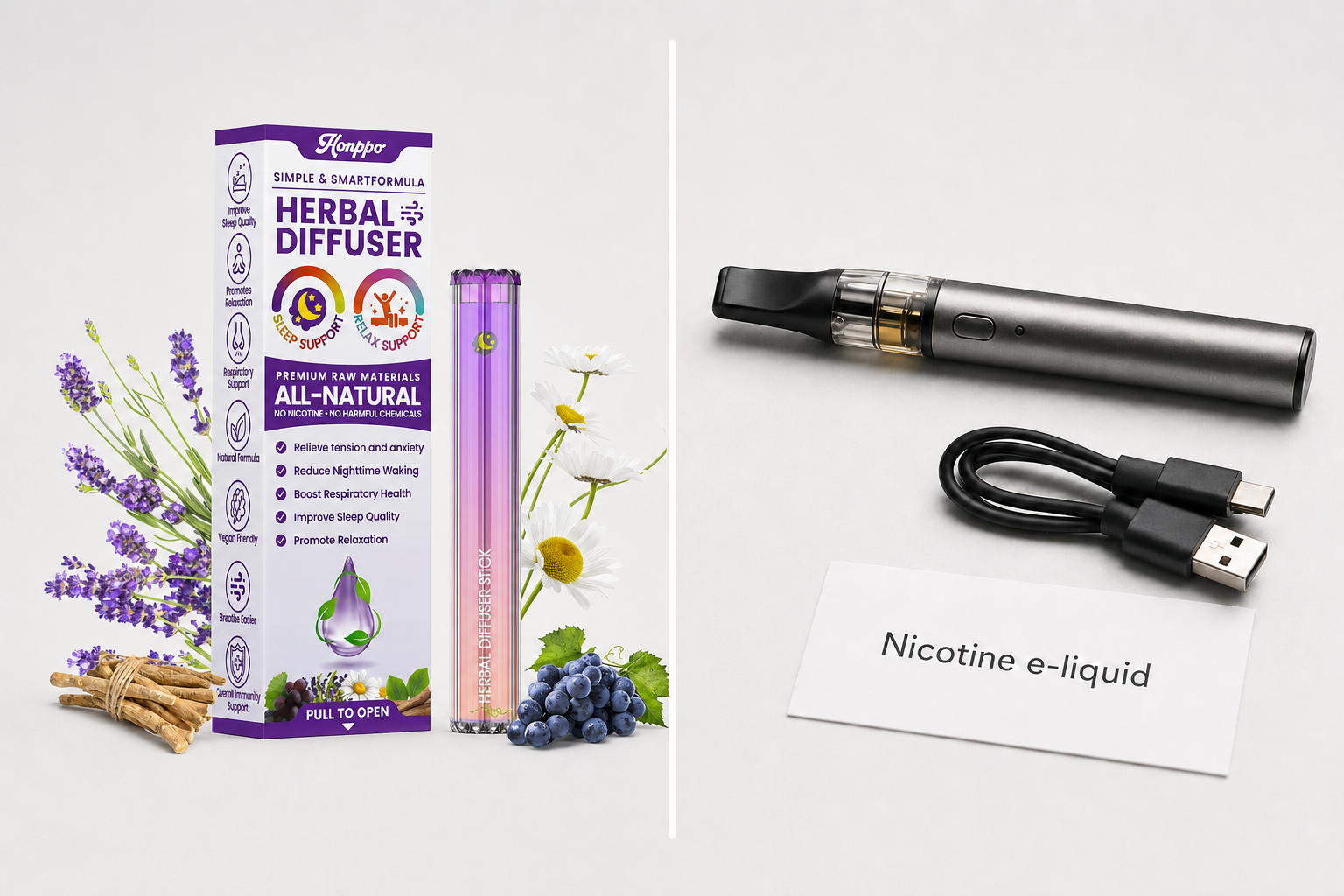
If I want the short answer: a diffuser pen is for botanical aroma, while a vape pen is built to inhale nicotine or cannabis liquids. That one label check can save me from buying the wrong product.
Here’s the core difference in plain terms:
- Diffuser pen: adult aroma device, often 0% nicotine and 0% tobacco
- Vape pen: heated device for nicotine, THC, CBD, or flavored e-liquid
- Main thing to check: the ingredient list, not just the pen shape
- Best label signs: named ingredients, clear nicotine status, and no MCT oil or vitamin E acetate
- Use boundary: for adults 21+
A lot of these products look almost the same, but the contents put them in separate product categories. Even 0 mg nicotine vape products can still fall into the vape category because of how they’re made and used.
Quick Comparison
| Feature | Diffuser Pen | Vape Pen |
|---|---|---|
| Main use | Botanical aroma | Nicotine or cannabis inhalation |
| What’s inside | Plant extracts and aroma blends | PG/VG, nicotine, THC/CBD, flavorings |
| Heat | Often no-heat or low-heat | Battery-powered heating element |
| Label focus | Nicotine-free, tobacco-free, named botanicals | Nicotine strength, PG/VG, active ingredients |
| Product type | Aroma device | Vape/ENDS product |
If I’m shopping for an adult daily routine item, this comparison helps me tell apart a botanical aroma pen from a vape product in seconds.
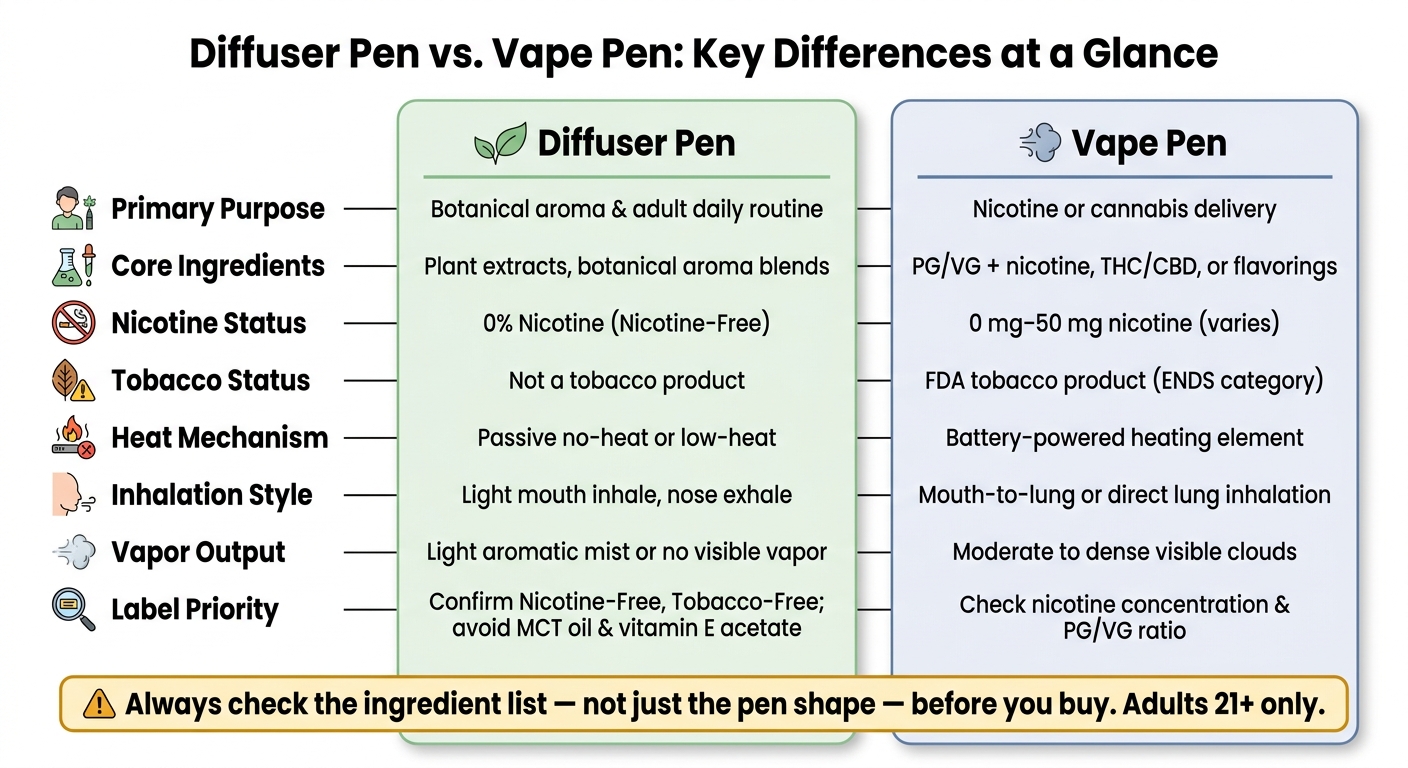
Diffuser Pen vs. Vape Pen: Side-by-Side Comparison
What a Diffuser Pen Is and How Adults Use It
A botanical diffuser pen is an aroma device, not a nicotine device and not a cannabis device. That difference starts with how the product works.
Most botanical diffuser pens are passive, no-heat devices. Some use gentle heat to release aroma. Adults often use them during work, travel, yoga, meditation, or as part of an evening wind-down routine. The purpose is scent and product education around botanical aroma, not stimulation. You can find more botanical diffuser guides to help you choose the right routine.
Typical Ingredients and What to Expect
A well-labeled botanical diffuser pen should clearly show 0% nicotine and 0% tobacco. Common ingredients may include mullein, lavender, chamomile, thyme, and other botanical extracts.
Many brands suggest inhaling through the mouth and exhaling through the nose so adults can notice the aroma without deep inhalation. That ingredient profile is a key point that sets diffuser pens apart from vape pens.
"A well-labeled botanical diffuser pen should clearly state 0% nicotine and 0% tobacco."
Use Boundaries for Botanical Diffuser Pens
These products are intended for adults 21+. They are not intended to diagnose, treat, or cure any medical conditions. They are also not marketed as smoking cessation medical devices.
Before use, check the label for:
- A full ingredient list
- 0% nicotine
- 0% tobacco
Adults with pre-existing respiratory conditions should consult a healthcare professional before using any inhalation device. If you’re using a passive, no-heat diffuser pen, replace the cap when it’s not in use to help keep the contents fresh.
sbb-itb-5292d78
What a Vape Pen Is and What It Usually Contains
A vape pen is a battery-powered device that heats liquid or oil into an aerosol for inhalation. Its main job is to deliver nicotine or cannabis aerosol, not scent and not part of an adult daily routine built around botanical aroma.
Common Ingredients and Intended Effects
Most vape liquids contain propylene glycol (PG) and vegetable glycerin (VG). Manufacturers then add nicotine, THC, CBD, or flavorings. Adults often use vape pens for nicotine intake or recreational cannabis use.
That’s the key difference: vape liquids are made for inhalation of active ingredients, so they do not fit in the same category as botanical diffuser blends.
Why Vape Pens Fall Into a Different Product Category
Vape pens fall under FDA tobacco rules and are classified as ENDS, even when they are nicotine-free, because they are designed to mimic smoking. That label has practical weight. If an adult wants to avoid nicotine or cannabis, it’s smart to read product labels with care.
Some devices look a lot like wellness pens or aroma pens, but the hardware can be nearly the same as a standard vape. What sets the category is the cartridge content, not the shape of the device. That distinction matters most in the side-by-side comparison that follows.
Diffuser Pen vs. Vape Pen: Side-by-Side Differences
The biggest difference comes down to what’s inside the cartridge. This table gives you a quick look at purpose, ingredients, how each product is used, and where the label matters most.
Comparison Table: Purpose, Contents, Experience, and Safety Boundaries
| Feature | Botanical Diffuser Pen | Vape Pen |
|---|---|---|
| Primary Purpose | Aromatherapy, adult daily routine, sensory use | Nicotine use, smoking alternative |
| Core Ingredients | Botanical aroma blends, plant extracts, carrier base | PG/VG plus nicotine, THC/CBD, or flavorings |
| Nicotine Status | Nicotine-free | Typically contains nicotine; 0 mg versions also exist |
| Tobacco Status | Not a tobacco product | FDA tobacco product category |
| Inhalation Style | Light mouth inhale, nose exhale | Lung inhalation or mouth-to-lung inhalation |
| Vapor Output | Light aromatic mist or no visible vapor | Moderate to dense visible clouds |
| Example Use | Aroma routines, evening wind-down routine, sensory use | Nicotine or cannabis inhalation |
| Label Priority | Confirm nicotine-free and tobacco-free labeling, and watch for cutting agents like MCT oil | Check nicotine concentration (0 mg–50 mg) and PG/VG ratio |
“Natural” doesn’t mean risk-free. Any inhaled product calls for caution, especially for adults with respiratory conditions.
How to Choose the Right Option and Key Takeaways
Start with the use case. If the product is meant for botanical aroma use, you’re looking at a diffuser pen. If it’s made for nicotine or cannabis delivery, it falls into the vape pen category. That’s why the label is the next thing to check.
A simple example helps. Peppermint and eucalyptus often fit a daytime routine, while chamomile makes more sense for an evening wind-down routine.
When you’re standing at the shelf, the ingredient list is the fastest way to tell what you’re dealing with. Botanical diffuser pens should name plant-based ingredients or aroma blends such as lavender, chamomile, peppermint, eucalyptus, or mullein. Vape pens often list PG, VG, and a nicotine concentration. If the label only says “flavorings” and doesn’t tell you what’s inside, skip it until the ingredients are clearly named.
Label clarity matters before you buy. Look for direct "Nicotine-Free" and "Tobacco-Free" wording. Also avoid products made with MCT oil or vitamin E acetate as carriers. What’s inside the device tells you both the product category and its overall risk profile. Third-party lab-tested products are the better pick.
Key Points to Remember Before You Buy
Use this quick checklist before you buy:
- Botanical diffuser pens are aroma devices, not nicotine delivery systems.
- Vape pens deliver nicotine or cannabis aerosols and sit in a different product category.
- Buy only products with named ingredients, nicotine-free/tobacco-free labeling, and no MCT oil or vitamin E acetate.
- Use only as an adult 21+ product. If you have a respiratory condition, avoid inhaled products.
FAQs
How can I tell what’s inside the pen before buying?
Check the product packaging and the manufacturer’s website for the full ingredient list. A company you can trust should show clear labeling, so you know exactly what you’re breathing.
Make sure the product is nicotine-free, tobacco-free, and free of synthetic chemicals. It should contain only natural botanical extracts or essential oils, with no hidden cutting agents or other harmful additives.
Can a 0 mg product still be considered a vape pen?
Yes – if it uses a battery-powered coil to heat a liquid into a visible aerosol, it is still technically a vape pen, even without nicotine.
If it uses passive airflow and has no liquid or heating element, it is not a vape. It is typically categorized as an aromatherapy inhaler.
Are diffuser pens safer than vape pens?
Not necessarily. Both involve inhaling substances into the lungs, so neither is risk-free.
Diffuser pens usually do not contain nicotine or tobacco, which is one reason some adults look at them as part of a nicotine-free, tobacco-free daily routine. That said, heating botanical aroma blends can create volatile organic compounds. Those compounds may irritate the airways or lead to coughing or allergic reactions in some people. Research on long-term inhalation of botanical blends is still limited.